Monday, December 8, 2008
UH-Manoa Announces Competition on Sustainability
I am thrilled that the UHM has put sustainability front and center with today’s announcement of an internal $1,000,000 research competition, an unprecedented undertaking in and of itself. I quote from the announcement by the Vice President for Research:
“Sustainability, or lack thereof, is most critical in Hawai’i given our geographic isolation, fragile ecosystems, limited resources, and resulting increased costs (monetary and otherwise) to function in an island economy/ecosystem. To this end, it is imperative that we focus our efforts to reach and ultimately move beyond a plateau of sustainability. The University of Hawai‘i at Mânoa should play a key leadership role in this endeavor, as the flagship UH Campus and a leading research institution.”
“As an initial step in support of the stated objectives the Office of the Vice Chancellor for Research and Graduate Education is pleased to announce an internal competition open to University of Hawai‘i-Mânoa faculty for a single 1 million dollar research grant in the broad area of sustainability.”
“The proposals will be reviewed by a committee of internal and external scholars and the recipient(s) of the 1 million dollar grant will be announced on Earth Day (April 22, 2009). Project funding will run from June 1, 2009 through May 31, 2011.”
I am also pleased that a group of faculty at the Department of Civil and Environmental Engineering (CEE) took the initiative to develop some ideas for sustainability for which civil engineers are uniquely qualified to research and develop. A brief summary of draft ideas under the umbrella concept of a SIT Center is given below.
Advanced work on sustainability will put both the University and the entire state in the front lines of development for the long term survival of the human race on Earth. I look forward to this competition and results.
Sustainable Infrastructure and Transportation (SIT) Center
Mission: The Sustainable Infrastructure and Transportation Center (SIT Center) will contribute directly to both national and Hawaii security and mobility. The mission of the SIT Center is to lead heavily populated island communities like Hawaii to a path of sustainability through the
• careful management of energy resources,
• expansion of renewable sources of energy,
• optimization of urban travel, and
• minimization of solid and liquid wastes through remanufacturing the wastes into useful products.
The mission will be accomplished via research, education, technology transfer, and advocacy. Sustainability is critical to Hawaii as a remote island state, and the lessons learned are applicable to many populated island communities such as Guam, Caribbean Islands, Cyprus, Crete, Sicily, Corsica, Madagascar, Sri Lanka, Philippine Islands, Taiwan, Singapore, and Okinawa. In addition, the transformation of Hawaii into a resource-sustainable society will demonstrate to the rest of the nation what can be done to increase sustainability nationwide.
Definition: The goal of sustainability is to provide efficient and effective infrastructure and transportation for people, services, and goods while optimizing energy requirements and minimizing the usage of non-renewable energy resources. It addresses system design and operations, management, policies, technology transfer and deployment, and public-private partnerships.
Organization: The SIT Center is planned to consist of two main tracks, one focusing on sustainable infrastructure and the other on sustainable transportation and energy.
Sustainable Infrastructure focuses on 1) resource efficiency of the built infrastructure; 2) recycling and reuse of wastes, which leads to a no-landfill solution for household waste; and 3) the remanufacture of useful products from the waste stream. All activities will stimulate local economic development, as industry develops to commercialize the technology. SIT will serve the technology transfer needs for this new industry. Already, the CEE department has established research in the recycling and reuse of waste materials ranging from discarded glass and tires in concrete and asphalt, fly-ash produced by the H-Power plant, and reclaimed wastewater.
Sustainable Transportation and Energy focuses on ways to reduce dependency on fossil fuels while maintaining high levels of urban mobility. Constantly evolving intelligent transportation systems (ITS) are currently a national focus and provide the means to optimize traffic operations and management. Economic research provides the foundation for pricing and tolling schemes that externalize the full cost of trip-making. Renewable energy sources are the long term key to energy independence, particularly in places like Hawaii where solar, geothermal, wind and wave energy abound. SIT will complement the new UH National Renewable Marine Energy Center.
The overall goal of SIT is to promote technology transfer and deployment of sustainable transportation and energy operations via research, outreach, and education using Hawaii as the demonstrable test bed. The Center will provide a critical mass for expertise to conduct research, educate, and collaborate with public and private partners.

Some Options for Architects Who Dislike Traditional Elevated Rail
The architects’ society, AIA Honolulu, drafted comments on the rail DEIS. Basically they are in favor of the rail concept but they do not want elevated rail. To quote their December 4, 2008 draft letter to the City: “In comparison with elevated systems, at grade systems would require less taxpayer funding and offer greater flexibility and affordability in planning for future extensions.”
On Oahu, at grade rail will be cheaper in terms of guideway costs, and it will have a much lower aesthetic impact, but its requirements for condemnation and roadway congestion will both skyrocket. Condemnation would be extensive (and very expensive) because at grade space must be found for the wide turns that trains make and for 20+ stations. Roadway lanes will be lost to light rail; not only one lane per direction, but also adjacent lanes to install stations. For example, an at-grade light rail installation between downtown and the UH will practically take all of Beretania Street and maybe allow for one lane left for local access and deliveries. Lane-taking in Honolulu, one of the most lane starved cities in the nation, is not rational. Overall AIA’s recommendation for at grade rail is not a practical one.
Would a light version of the Japanese roof-mounted monorail make better sense?

This is the Ofuna Enoshima monorail. The guideway and posts of this system can be made slimmer by designing them for smaller and lighter trains, so the visual impact when a train is absent is small. But of course its stations would still be big and obtrusive. Such a system was not presented or evaluated in the DEIS.
Another fixed guideway option is the PPT, or personal public transit, but all of them are experimental or drawing board concepts. There are several concepts but the SkyTran concept for personalized magnetic levitation (Maglev) rapid transit (http://www.unimodal.com/) is exciting and All American. Its light structure makes it much more suitable for beautiful Honolulu.

If Honolulu were to develop 12 miles of HOT lanes now to solve its leeward Oahu congestion issues, in 20 years some of the PPT could be market ready and they have the potential to be fast, quiet, convenient and inexpensive. With HOT lanes, underpasses, smart traffic lights and PPT, Honolulu in 2030 would be an international transportation technology capital. This would be accomplished at a locally affordable cost and with minimal impact to aesthetics, cultural and historical sites.
On Oahu, at grade rail will be cheaper in terms of guideway costs, and it will have a much lower aesthetic impact, but its requirements for condemnation and roadway congestion will both skyrocket. Condemnation would be extensive (and very expensive) because at grade space must be found for the wide turns that trains make and for 20+ stations. Roadway lanes will be lost to light rail; not only one lane per direction, but also adjacent lanes to install stations. For example, an at-grade light rail installation between downtown and the UH will practically take all of Beretania Street and maybe allow for one lane left for local access and deliveries. Lane-taking in Honolulu, one of the most lane starved cities in the nation, is not rational. Overall AIA’s recommendation for at grade rail is not a practical one.
Would a light version of the Japanese roof-mounted monorail make better sense?

This is the Ofuna Enoshima monorail. The guideway and posts of this system can be made slimmer by designing them for smaller and lighter trains, so the visual impact when a train is absent is small. But of course its stations would still be big and obtrusive. Such a system was not presented or evaluated in the DEIS.
Another fixed guideway option is the PPT, or personal public transit, but all of them are experimental or drawing board concepts. There are several concepts but the SkyTran concept for personalized magnetic levitation (Maglev) rapid transit (http://www.unimodal.com/) is exciting and All American. Its light structure makes it much more suitable for beautiful Honolulu.

If Honolulu were to develop 12 miles of HOT lanes now to solve its leeward Oahu congestion issues, in 20 years some of the PPT could be market ready and they have the potential to be fast, quiet, convenient and inexpensive. With HOT lanes, underpasses, smart traffic lights and PPT, Honolulu in 2030 would be an international transportation technology capital. This would be accomplished at a locally affordable cost and with minimal impact to aesthetics, cultural and historical sites.
Wednesday, December 3, 2008
20 Simple but Important Questions for the Rail DEIS
The Draft Environmental Impact Statement (DEIS) of the City’s proposed rail system is the document that should provide answers to all reasonable impacts. It is available at all public libraries. It is also available at the city’s website honolulutransit.com along with a lot of the rail propaganda that your tax dollars paid for.
Below I list 20 simple but important questions. Does the DEIS answer them clearly?
These and many more questions require simple and clear answers.
In addition to the 429 page DEIS, the following files contain information and visuals. The City distributes them on a DVD.
Below I list 20 simple but important questions. Does the DEIS answer them clearly?
- The bus routes will change. What happens to your route? What happens to express buses?
- Lanes will be taken away, some temporarily for construction and some permanently. Where are those lane closures and what is their duration? Are there traffic rerouting plans?
- Will there be bike racks on the train and where will they be located? Will bikes be allowed on the train? Will there be a place for surfboards? What about luggage? What about construction workers’ tools? Will there be a place for people to put large items they purchase at a big box retailer? What’s the size limitation?
- Will there be washrooms at the stations? How about convenience stores, vending machines? Will the platforms have seats? How many?
- Under land use, Aloun farms needs to relocate. Is that possible? Where will they go?
- A relatively simple job of sewer upgrades in Kailua and Kapiolani lead to the loss of businesses and jobs. Are details provided about similar effects during the construction of the rail?
- Is there a detailed plan for the effect of rail construction on water, sewer, gas and electric utilities? Will there be disruptions of service? Who pays for all these?
- About $107 million will be spent on the soft costs of this project. This “paperwork” cost is rather exorbitant for a single 20 mile rail line. How did $107 million get spent?
- The DEIS list of preparers for technical content shows that it was done almost exclusively with out-of-Hawaii engineers, planners and specialists. (See this document under Consultants: http://www.honolulutransit.org/library/files/end.pdf.) H-3 freeway was designed mostly with Hawaii based engineers. If Hawaii engineers are not able to design rail, who will supervise and build this unfamiliar-to-Oahu infrastructure?
- Rail construction involves unique skills and certifications that Hawaii construction workers do not have. How will this be addressed?
- The city has declared that in many cases only a portion of a parcel needs to be condemned and taken away. Can the business survive with the remaining portion? Are they forced to mandatory downsizing and some loss of employment?
- There are 16 schools that are adjacent to the alignment. Will the overhead structure, the continuous high current exposure and the intermittent noise and vibration affect the learning environment? Is it prudent to relocate the schools?
- Does rail fit our Hawaiian Sense of Place? How was the impact to tourism and local quality of life by a large elevated structure through town been assessed?
- Does the DEIS address the impacted vistas and scenery? Are the aesthetics of the structure and each station explained and presented adequately?
- What will happen in the event of a hurricane? Will the train operate? The train in Houston was shut down for 10 days due to hurricane Ike.
- BART in the Bay Area uses rail cars made of aluminum to combat corrosion. Is the city’s position that corrosion is not an issue?
- It appears that General Excise Tax surcharge proceeds for rail will be much lower than expected for at least four years in a row. How is this deficit going to be made up?
- If ridership turns out to be lower than forecast, then what? If the city is forced to provide free train rides like in Puerto Rico, how is the shortfall going to be covered?
- I heard that the Ala Moana station will now be at a lower elevation, at the west end of Kona Street and not above Nordstrom’s. What is the exact plan for the Ala Moana Center station and how is the train going to Waikiki and UH afterwards?
- Starting construction in Kapolei makes little sense. It may be expeditious and convenient but it is not smart. Why can’t a temporary rail yard be established near the airport or Aloha Stadium and build rail east into the city and west out to Kapolei simultaneously?
These and many more questions require simple and clear answers.
In addition to the 429 page DEIS, the following files contain information and visuals. The City distributes them on a DVD.
- Historic Resources.pdf
- Land Use.pdf
- Transportation Tech Report.pdf
- Street Trees.pdf
- Electric and Magnetic Fields Technical Report.pdf
- Visual and Aesthetic Technical Report.pdf
- Historic Appendix B.pdf
- Cultural Resources.pdf
- Economics.pdf
- Geology, soils, farmlands, and natural hazardsTech Report.pdf
- Haz Waste and Mat Tech Report Appendix A.pdf
- Natural Resources.pdf
- Noise&Vibration.pdf
- Haz Waste and Mat Tech Report.pdf
- tEISTravelForecasting ENTIRE.pdf
- Community Impacts.pdf
- Archaeological Resources.pdf
- Water Resources.pdf
- AQ&Energy.pdf
Tuesday, November 25, 2008
Care about Oahu’s Energy Dependency? Look into Cars not Rail
Fossil fuel energy dependency and “carbon footprint” (a 21st century moniker for air pollution and green house gasses) are major concerns of many citizens which, combined with the wrong belief that rail systems are energy efficient (because they are “electric”) lead to wrong conclusions and decisions.
Rail systems can indeed be efficient if they are heavily utilized. Alas, only in cities with several million of densely distributed population the utilization of rail is high enough throughout the day. Those systems experience crash loads in the peak hours and heavy loads during most of the off peak hours. As a result energy per passenger mile is low and efficiency is high. Many of them in Canada, France, Japan, Taiwan or the United Kingdom are powered by electricity from nuclear or hydroelectric plants, so their carbon footprint is minimal.
However, in small population cities like Honolulu, a rail system may see some heavy utilization for two to four hours per day and the rest of the time it runs with a light load of passengers (and sometimes nearly empty) which leads to a very poor overall energy efficiency. Worse yet, its electricity come from diesel and coal, so the carbon footprint is very large.
The same could be said about buses, but buses do not have stations with lights, elevators, escalators, ticket machines, etc. and the security and other required attendants. Buses can be propelled by clean energy, e.g., fuel cells. There are several such buses in demonstration service and of course there are many hybrid buses on the streets of Honolulu already. Most buses in the city of Tacoma are LNG, or liquefied natural gas which burns much cleaner than liquid fossil fuels and is relatively abundant.
However, the comparison of rail to buses is baseless. Buses do fine without rail, as TheBus in Honolulu demonstrates. But rail is useless without buses. Honolulu's proposed system has 20 stations and that's it. Honolulu has thousands of activity points and hundreds of thousands or residences. Its proposed rail has twenty stations. The disconnect is obvious and only buses and cars can bridge the huge gaps between where the rail goes and where the people go. (That's one of several reasons why rail does not reduce traffic congestion.)
Except for nuclear, there are no clean energy power plants producing power for rail systems and this is unlikely to change any time soon since existing power plants have very long useful lives. So the present and long term (~20 year) conclusion is that rail systems in smaller cities (~2 million or less)
What’s the outlook for cars? Fortunately we do not have to make any guesses. The outlook for the U.S. car fleet is already present in Asia and Europe.
Compared to the oil crises of the 20th century which propelled the Japanese auto industry to international prominence, this time there is better news because U.S. auto manufacturers won’t be left out. On the contrary, their EU and Asia divisions are manufacturing remarkable cars. (Note that all the discussion herein is for vehicles being sold out of dealer showrooms, not for concept cars.)
Ford Fiesta and Mazda 2 are jointly developed small cars of the size of a BMW Mini, a popular small vehicle on Oahu. The 1.6 liter diesel engine of the Fiesta is capable of taking it to a top speed of 120 mph and provides an average fuel efficiency of 56 mpg, almost twice of today’s 1.6 liter gasoline powered Mini. The similar Mazda 2 was chosen the 2008 World Car of the Year.
Ford also offers the C-Max a 5 or 7 passenger car in the compact category with a 58 cubic feet cargo ability with the rear seats folded. Both gas and diesel engines are available. The gas engine delivers an average of 32 mpg whereas the diesel engine delivers 41 mpg.
Ford Kuga is a stylish crossover vehicle which is sold with only one engine option: A two liter diesel which delivers an average of 37 mpg and needs refueling every 550 miles. Ford plans to bring this vehicle in the U.S., but apparently the average U.S. Ford customer is not as sensitive to fuel price and pollution as their EU counterpart: A 2.5 liter gasoline engine is planned for it. Or perhaps a 2 liter hybrid version. The latter may come close to the efficiency of the EU version (but with a more complex and expensive power plant combination.)
GM will introduce the Opel Corsa to the U.S., a car slightly smaller than the VW Rabbit. The Corsa has been sold in Europe and elsewhere for over 10 years and there are eight different motors for it, depending on version and market. Of great interest is the version presented at the 2007 Frankfurt Auto Show which combined a 1.3 turbo diesel engine with a hybrid motor to deliver a 63 mpg fuel efficiency and good performance.
Then of course there are competing offerings from Toyota (the 3-cylinder iQ gets 56 mpg), or the fully-electric Mitsubishi MiEV (costs about $25,000 and has an 80 mile range.)
Honda already imports the Fit to the U.S. The 2009 version delivers 27 mpg in the city for under $15,000. In various automotive magazine tests, the Fit delivered a frugal 35 mpg overall. The 2009 Toyota Prius is still formidable at 48 mpg in the city. Honda’s answer to that is the 40 mpg in the city Civic hybrid.
Speaking of hybrids, statistics of the U.S. Department of Energy show that their sales took off in 2005. Sales started at 9,000 units in 2000 and grew quickly to 84,000 by 2004. But in the last three years their sales have exploded: 210,000 units in 2005, 253,000 in 2006 and 352,000 in 2007. It is likely that a half million units per year sold in the U.S. will be reached by 2010 despite softening fuel prices and weak overall economy.
In conclusion, if people are concerned about carbon footprint and dependency to fossil fuels, then looking to return to 19th century commuting in trains is not the answer. Been there done that. Too limited, too crowded, too inconvenient.Modern society evolved out of it.
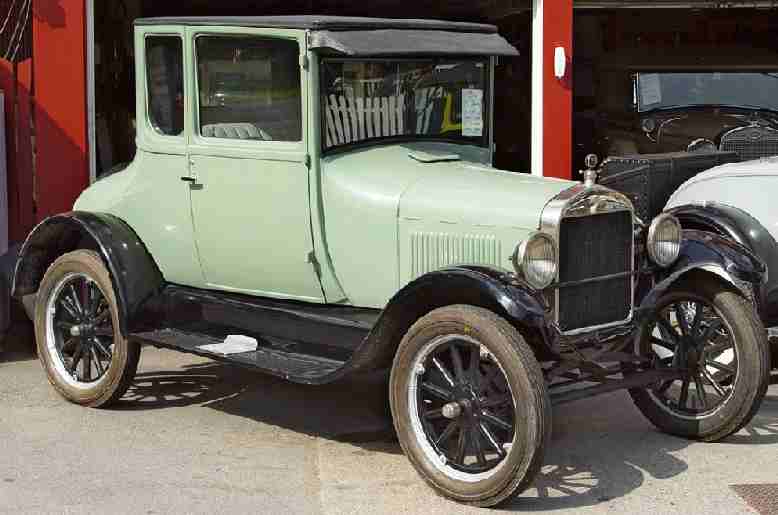
Technology is providing the solutions to the problems. This is the same technology that in one person's life time took us from the 1920 Ford Model T with its top speed of 35 mph and a fuel economy of 20 mpg to, say, the 2009 Ford Escape Hybrid with its top speed of over 100 mph and fuel economy of 34 mpg in the city.
In the next 20 years there will be an abundant selection of vehicles that are two or three times more efficient than today’s average offerings. This reduces fossil fuel dependency substantially. Combined with less travel, more telecommuting and wider use of renewable energy and natural gas, dependency on oil can be reduced dramatically.
In the next 20 years, scientific knowledge may overcome unfounded fears and allow us to replace oil fueled power plants with nuclear ones, for the benefit of our planet. This is a win-win-win proposition for the U.S.: Less dependency on oil imports, green house gas free electricity generation, domestic high-technology infrastructure development boosts the local and national economy.
If that occurs, then fully electric and truly non-polluting vehicles are possible. There are several fully electric cars available, the Tesla Roadster being the most spectacular U.S. electric vehicle in small production. Affordable and clean electricity is needed for mass production of electric vehicles and convenient fueling at Electron Stations which today we call Gas Stations. Or at park-and-plug parking stalls: It is not hard to imagine a parking meter with an electric outlet, isn’t it?
Better Place offers a concept of an all-electric car future. Hawaii's Governor Lingle has been briefed. California signed up last week.
Rail systems can indeed be efficient if they are heavily utilized. Alas, only in cities with several million of densely distributed population the utilization of rail is high enough throughout the day. Those systems experience crash loads in the peak hours and heavy loads during most of the off peak hours. As a result energy per passenger mile is low and efficiency is high. Many of them in Canada, France, Japan, Taiwan or the United Kingdom are powered by electricity from nuclear or hydroelectric plants, so their carbon footprint is minimal.
However, in small population cities like Honolulu, a rail system may see some heavy utilization for two to four hours per day and the rest of the time it runs with a light load of passengers (and sometimes nearly empty) which leads to a very poor overall energy efficiency. Worse yet, its electricity come from diesel and coal, so the carbon footprint is very large.
The same could be said about buses, but buses do not have stations with lights, elevators, escalators, ticket machines, etc. and the security and other required attendants. Buses can be propelled by clean energy, e.g., fuel cells. There are several such buses in demonstration service and of course there are many hybrid buses on the streets of Honolulu already. Most buses in the city of Tacoma are LNG, or liquefied natural gas which burns much cleaner than liquid fossil fuels and is relatively abundant.
However, the comparison of rail to buses is baseless. Buses do fine without rail, as TheBus in Honolulu demonstrates. But rail is useless without buses. Honolulu's proposed system has 20 stations and that's it. Honolulu has thousands of activity points and hundreds of thousands or residences. Its proposed rail has twenty stations. The disconnect is obvious and only buses and cars can bridge the huge gaps between where the rail goes and where the people go. (That's one of several reasons why rail does not reduce traffic congestion.)
Except for nuclear, there are no clean energy power plants producing power for rail systems and this is unlikely to change any time soon since existing power plants have very long useful lives. So the present and long term (~20 year) conclusion is that rail systems in smaller cities (~2 million or less)
- have a large carbon footprint,
- are heavily dependent on fossil fuels for their electricity, and
- consume a lot of energy per passenger.
What’s the outlook for cars? Fortunately we do not have to make any guesses. The outlook for the U.S. car fleet is already present in Asia and Europe.
Compared to the oil crises of the 20th century which propelled the Japanese auto industry to international prominence, this time there is better news because U.S. auto manufacturers won’t be left out. On the contrary, their EU and Asia divisions are manufacturing remarkable cars. (Note that all the discussion herein is for vehicles being sold out of dealer showrooms, not for concept cars.)
Ford Fiesta and Mazda 2 are jointly developed small cars of the size of a BMW Mini, a popular small vehicle on Oahu. The 1.6 liter diesel engine of the Fiesta is capable of taking it to a top speed of 120 mph and provides an average fuel efficiency of 56 mpg, almost twice of today’s 1.6 liter gasoline powered Mini. The similar Mazda 2 was chosen the 2008 World Car of the Year.
Ford also offers the C-Max a 5 or 7 passenger car in the compact category with a 58 cubic feet cargo ability with the rear seats folded. Both gas and diesel engines are available. The gas engine delivers an average of 32 mpg whereas the diesel engine delivers 41 mpg.
Ford Kuga is a stylish crossover vehicle which is sold with only one engine option: A two liter diesel which delivers an average of 37 mpg and needs refueling every 550 miles. Ford plans to bring this vehicle in the U.S., but apparently the average U.S. Ford customer is not as sensitive to fuel price and pollution as their EU counterpart: A 2.5 liter gasoline engine is planned for it. Or perhaps a 2 liter hybrid version. The latter may come close to the efficiency of the EU version (but with a more complex and expensive power plant combination.)
GM will introduce the Opel Corsa to the U.S., a car slightly smaller than the VW Rabbit. The Corsa has been sold in Europe and elsewhere for over 10 years and there are eight different motors for it, depending on version and market. Of great interest is the version presented at the 2007 Frankfurt Auto Show which combined a 1.3 turbo diesel engine with a hybrid motor to deliver a 63 mpg fuel efficiency and good performance.
Then of course there are competing offerings from Toyota (the 3-cylinder iQ gets 56 mpg), or the fully-electric Mitsubishi MiEV (costs about $25,000 and has an 80 mile range.)
Honda already imports the Fit to the U.S. The 2009 version delivers 27 mpg in the city for under $15,000. In various automotive magazine tests, the Fit delivered a frugal 35 mpg overall. The 2009 Toyota Prius is still formidable at 48 mpg in the city. Honda’s answer to that is the 40 mpg in the city Civic hybrid.
Speaking of hybrids, statistics of the U.S. Department of Energy show that their sales took off in 2005. Sales started at 9,000 units in 2000 and grew quickly to 84,000 by 2004. But in the last three years their sales have exploded: 210,000 units in 2005, 253,000 in 2006 and 352,000 in 2007. It is likely that a half million units per year sold in the U.S. will be reached by 2010 despite softening fuel prices and weak overall economy.
In conclusion, if people are concerned about carbon footprint and dependency to fossil fuels, then looking to return to 19th century commuting in trains is not the answer. Been there done that. Too limited, too crowded, too inconvenient.Modern society evolved out of it.
Technology is providing the solutions to the problems. This is the same technology that in one person's life time took us from the 1920 Ford Model T with its top speed of 35 mph and a fuel economy of 20 mpg to, say, the 2009 Ford Escape Hybrid with its top speed of over 100 mph and fuel economy of 34 mpg in the city.
In the next 20 years there will be an abundant selection of vehicles that are two or three times more efficient than today’s average offerings. This reduces fossil fuel dependency substantially. Combined with less travel, more telecommuting and wider use of renewable energy and natural gas, dependency on oil can be reduced dramatically.
In the next 20 years, scientific knowledge may overcome unfounded fears and allow us to replace oil fueled power plants with nuclear ones, for the benefit of our planet. This is a win-win-win proposition for the U.S.: Less dependency on oil imports, green house gas free electricity generation, domestic high-technology infrastructure development boosts the local and national economy.
If that occurs, then fully electric and truly non-polluting vehicles are possible. There are several fully electric cars available, the Tesla Roadster being the most spectacular U.S. electric vehicle in small production. Affordable and clean electricity is needed for mass production of electric vehicles and convenient fueling at Electron Stations which today we call Gas Stations. Or at park-and-plug parking stalls: It is not hard to imagine a parking meter with an electric outlet, isn’t it?
Better Place offers a concept of an all-electric car future. Hawaii's Governor Lingle has been briefed. California signed up last week.
Thursday, November 20, 2008
Policy and Infrastructure: A New Course for Civil Engineerring Majors at UH-Manoa
CEE 491 – Policy and Infrastructure
Dr. Panos D. Prevedouros
Spring 2009
Infrastructure is a rather complex and not-so-clearly defined word. Only about twenty years ago there was an attempt to define it with some precision by the National Research Council (NRC); its definition provided some clarity by adopting the term public works infrastructure to include
Of note is the part of the definition that clarifies that infrastructure is not only the physical system but the operation and management of it. Operation and management is an area of weakness for CEEs. In addition, in many systems O+M costs may dwarf high construction costs because public works infrastructure has a typical life span of 50 to 100 years. Various types of engineers are involved in the operation of water, sewer, trash, road, airport, harbor, electric and telecom systems.
Now that we have a definitional grasp of one of the keywords of the course’s title, let’s cover our bases by defining policy. A policy is a deliberate plan of action to guide decisions and achieve rational outcome(s). The term may apply to government, private sector organizations and groups, and individuals.
The scope of this course may be narrowed down a bit by focusing on public (or government) policy on public works infrastructure with emphasis on civil engineering systems. What are major infrastructure systems? What are their technologies and functional variations? What are their characteristics and costs? Are there size limitations?
Engineers should be and in many cases are the primary advisors of elected or appointed decision makers responsible for the development or expansion of a type of infrastructure. What information and evaluation techniques would an engineer provide to decision makers in order for them to make the right choices for the community? Here is where good technical knowledge, honesty and ethics, and ability to keep up with new technologies and methods make the engineer a key partner in the choices and the future of a community.
The main areas covered in the course are outlined below:
This course relies on textbooks from previous CEE courses and on extensive use of the Internet to analyze infrastructure types and issues, and develop case studies to improve the situation on Oahu. It relies extensively on self learning and group collaboration to develop an understanding for the sample case studies.
Students form groups of three to five and tackle several case studies, identify alternatives and apply a high level evaluation. Each student will work on five case studies. Each case study culminates in a comprehensive presentation and brief report.
Dr. Panos D. Prevedouros
Spring 2009
Infrastructure is a rather complex and not-so-clearly defined word. Only about twenty years ago there was an attempt to define it with some precision by the National Research Council (NRC); its definition provided some clarity by adopting the term public works infrastructure to include
"both specific functional modes - highways, streets, roads, and bridges; mass transit; airports and airways; water supply and water resources; wastewater management; solid-waste treatment and disposal; electric power generation and transmission; telecommunications; and hazardous waste management - and the combined system these modal elements comprise.
A comprehension of infrastructure spans not only these public works facilities, but also the operating procedures, management practices, and development policies that interact together with societal demand and the physical world to facilitate the transport of people and goods, provision of water for drinking and a variety of other uses, safe disposal of society's waste products, provision of energy where it is needed, and transmission of information within and between communities.”
Of note is the part of the definition that clarifies that infrastructure is not only the physical system but the operation and management of it. Operation and management is an area of weakness for CEEs. In addition, in many systems O+M costs may dwarf high construction costs because public works infrastructure has a typical life span of 50 to 100 years. Various types of engineers are involved in the operation of water, sewer, trash, road, airport, harbor, electric and telecom systems.
Now that we have a definitional grasp of one of the keywords of the course’s title, let’s cover our bases by defining policy. A policy is a deliberate plan of action to guide decisions and achieve rational outcome(s). The term may apply to government, private sector organizations and groups, and individuals.
The scope of this course may be narrowed down a bit by focusing on public (or government) policy on public works infrastructure with emphasis on civil engineering systems. What are major infrastructure systems? What are their technologies and functional variations? What are their characteristics and costs? Are there size limitations?
Engineers should be and in many cases are the primary advisors of elected or appointed decision makers responsible for the development or expansion of a type of infrastructure. What information and evaluation techniques would an engineer provide to decision makers in order for them to make the right choices for the community? Here is where good technical knowledge, honesty and ethics, and ability to keep up with new technologies and methods make the engineer a key partner in the choices and the future of a community.
The main areas covered in the course are outlined below:
- The NEPA Process
- Impacts Analysis
- Evaluation of alternatives
- Case Study 1 – Transportation alternatives
- Case Study 2 – Pavements, cost, life, recycling
- Case Study 3 – Bridges and tunnels
- Case Study 4 – Sewer lines and water lines
- Case Study 5 – Utility tunnels, utility corridors
- Case Study 6 – Solid waste management
- Case Study 7 – Residential and industrial waste: Recycling, reuse, remanufacture
- Case Study 8 to 10 – Sustainability via renewable energy: Wave, ocean upwelling, geothermal, wind, solar, nuclear, biofuels, other
- Case Study 11 – Flood management
- Case Study 12 – Emergency management
This course relies on textbooks from previous CEE courses and on extensive use of the Internet to analyze infrastructure types and issues, and develop case studies to improve the situation on Oahu. It relies extensively on self learning and group collaboration to develop an understanding for the sample case studies.
Students form groups of three to five and tackle several case studies, identify alternatives and apply a high level evaluation. Each student will work on five case studies. Each case study culminates in a comprehensive presentation and brief report.
Wednesday, November 5, 2008
Is 50.6% a Win for Rail?
Official results for Oahu can be found from the state office of elections:
http://hawaii.gov/elections/results/2008/general/files/cch.pdf
One can see that all state and county questions passed or failed by a clear margin, except for the rail question for which the votes and percentages were:
YES 155,880 (50.6%)
NO 140,623 (45.6%)
Blank Votes 11,441 (3.7%)
If one accounts for the disproportional promotion, support from several special interest groups, and powerful "old boy" backing, then the result is not only surprising but it is embarrassing to the pro-rail cause.
Recall this poll reported in The Honolulu Advertiser putting rail support at 59%. It came in late August 2008 (http://www.honoluluadvertiser.com/article/20080827/NEWS09/808270388/-1/NEWS09), well before the October advertising storm by rail supporters: "Another rail poll, similar results: 59 percent of voters in People's Pulse survey back $3.7 billion project. That 59 percent level compares with 38 percent of voters who opposed the project, according to the People's Pulse poll ..." The problem is that the election votes in support of rail are barely over 50% and nowhere near 59%!
Proponents of rail had a $110 million engineering and marketing team and flooded airwaves, TV screens and print media. In comparison, opponents had peanuts; they did no TV promotion and only minimal print media promotion.
I understand and support elections of officials with a 0.6% or even a 0.01% margin. The elected person will stay in office for a limited and prescribed amount of time.
However, moving ahead with a multibillion dollar infrastructure project with a life cycle of over 100 years on a 0.6% "advantage" is an entirely different choice. Clearly 49.4% of the voters did not say yes to the project.
We can boot a crooked or ineffective elected official or re-write a bad law or amendment. But we cannot undo a multibillion piece of infrastructure which will cost us roughly three times the annual City budget. A two thirds majority would have been appropriate for this choice.
Of course, in the short term the railroading process is likely to proceed unabated, but in the longer term a permanent derailment is likely.
http://hawaii.gov/elections/results/2008/general/files/cch.pdf
One can see that all state and county questions passed or failed by a clear margin, except for the rail question for which the votes and percentages were:
YES 155,880 (50.6%)
NO 140,623 (45.6%)
Blank Votes 11,441 (3.7%)
If one accounts for the disproportional promotion, support from several special interest groups, and powerful "old boy" backing, then the result is not only surprising but it is embarrassing to the pro-rail cause.
Recall this poll reported in The Honolulu Advertiser putting rail support at 59%. It came in late August 2008 (http://www.honoluluadvertiser.com/article/20080827/NEWS09/808270388/-1/NEWS09), well before the October advertising storm by rail supporters: "Another rail poll, similar results: 59 percent of voters in People's Pulse survey back $3.7 billion project. That 59 percent level compares with 38 percent of voters who opposed the project, according to the People's Pulse poll ..." The problem is that the election votes in support of rail are barely over 50% and nowhere near 59%!
Proponents of rail had a $110 million engineering and marketing team and flooded airwaves, TV screens and print media. In comparison, opponents had peanuts; they did no TV promotion and only minimal print media promotion.
I understand and support elections of officials with a 0.6% or even a 0.01% margin. The elected person will stay in office for a limited and prescribed amount of time.
However, moving ahead with a multibillion dollar infrastructure project with a life cycle of over 100 years on a 0.6% "advantage" is an entirely different choice. Clearly 49.4% of the voters did not say yes to the project.
We can boot a crooked or ineffective elected official or re-write a bad law or amendment. But we cannot undo a multibillion piece of infrastructure which will cost us roughly three times the annual City budget. A two thirds majority would have been appropriate for this choice.
Of course, in the short term the railroading process is likely to proceed unabated, but in the longer term a permanent derailment is likely.
Sunday, November 2, 2008
Proposed 19 Mile Rail for Oahu. Bottom Line Benefit: 1% Increase in Transit Trips
Since 2006 I have been saying that the proposed rail on Oahu is nothing short of a joke. The just-released 2008 Draft Environmental Impact Statement (DEIS) proves this. Table 3-13 shows that transit share will increase from 6% to 7%. Auto based trips change from 82% to 80%, and walk-and-bike trips are 12%.
No administrator in his or her right mind would advocate the expenditure of five billion dollars for an 1% gain in the share of transit trips. The correct priorities would be to fix the sidewalks and build traffic and bike lanes. Not in Honolulu where administrators are proud to provide TheBoat at a taxpayer subsidy of $42 per trip!
Here is the breakdown of daily trips on weekdays as in DEIS page 3-18:
Notice the tiny benefit of rail. And to put it in perspective, that's out of more than four (4) million daily trips on Oahu!
This result evokes the paraphrasing of Churchill... Never before so many paid so much, to benefit so few and by so little.
Figure 3-1 shows that from 1984 to 2008, transit speed decreased by 1.5 mph. So in the last 22 years the average speed of the TheBus fell by 1.5 miles per hour. This is such a calamity that according to the Go-Rail-Go luminous spokespersons requires a five billion dollar rail to fix it!
The Notice of Intent or NOI is violated. This is the 2006 agreement between the Federal Transit Administration and the City and County of Honolulu. The NOI explicitly mentions a fixed guideway from Kapolei to the UH. The DEIS guideway starts well outside Kapolei and ends at Ala Moana Shopping Center. The 34 miles have become 19, but the alleged traffic benefits have more than doubled from the 2006 Alternatives Analysis!
It should be obvious that this DEIS will provide a lot of entertainment in the coming weeks. By law, comments are requested by January 7, 2009. But thanks to the careful planning of the Mufi administration, Oahu's public had the Sunday and Monday before the elections to read and understand 400 plus pages prior to making an educated choice at the polls.
No administrator in his or her right mind would advocate the expenditure of five billion dollars for an 1% gain in the share of transit trips. The correct priorities would be to fix the sidewalks and build traffic and bike lanes. Not in Honolulu where administrators are proud to provide TheBoat at a taxpayer subsidy of $42 per trip!
Here is the breakdown of daily trips on weekdays as in DEIS page 3-18:
- 2007 No Rail = 184,000 total transit trips (on bus)
- 2030 No Rail = 226,000 total transit trips (on bus)
- 2030 With Rail = 249,200 total transit trips (on bus and rail)
Notice the tiny benefit of rail. And to put it in perspective, that's out of more than four (4) million daily trips on Oahu!
This result evokes the paraphrasing of Churchill... Never before so many paid so much, to benefit so few and by so little.
Figure 3-1 shows that from 1984 to 2008, transit speed decreased by 1.5 mph. So in the last 22 years the average speed of the TheBus fell by 1.5 miles per hour. This is such a calamity that according to the Go-Rail-Go luminous spokespersons requires a five billion dollar rail to fix it!
The Notice of Intent or NOI is violated. This is the 2006 agreement between the Federal Transit Administration and the City and County of Honolulu. The NOI explicitly mentions a fixed guideway from Kapolei to the UH. The DEIS guideway starts well outside Kapolei and ends at Ala Moana Shopping Center. The 34 miles have become 19, but the alleged traffic benefits have more than doubled from the 2006 Alternatives Analysis!
It should be obvious that this DEIS will provide a lot of entertainment in the coming weeks. By law, comments are requested by January 7, 2009. But thanks to the careful planning of the Mufi administration, Oahu's public had the Sunday and Monday before the elections to read and understand 400 plus pages prior to making an educated choice at the polls.
Subscribe to:
Posts (Atom)


 Posts
Posts